It’s not easy to imagine a world without police, prisons, or capitalism. As scholar Ruha Benjamin notes, our collective imagination has been fragmented by racism and other systems of domination that produce misery for some and monopoly for others.
However, as Benjamin argues, we must take imagination seriously as a site of struggle and a vital resource for social change. What might a more just world look like? Asking these questions requires envisioning alternatives to the unjust institutions we know, and bringing new realities into being through creative practice.
The books below offer radical visions of Black futures that can inform our social movements today. Written by Black women scholars, activists, and artists, they imagine worlds without prisons, gentrification, or environmental destruction. As scholar Robin D.G. Kelley writes:
“Without new visions we don’t know what to build, only what to knock down.”
— Robin D.G. Kelley
Abolition Geography by Ruth Wilson Gilmore
In this pioneering work, scholar and organizer Ruth Wilson Gilmore presents a powerful geographical analysis of mass incarceration and state violence against communities of color. Synthesizing over three decades of her abolitionist theory and grassroots activism, Gilmore demonstrates how contemporary racial capitalism operates through an insidious “anti-state state” that answers economic, social and political crises with the calculated abandonment and disposal of populations declared expendable..
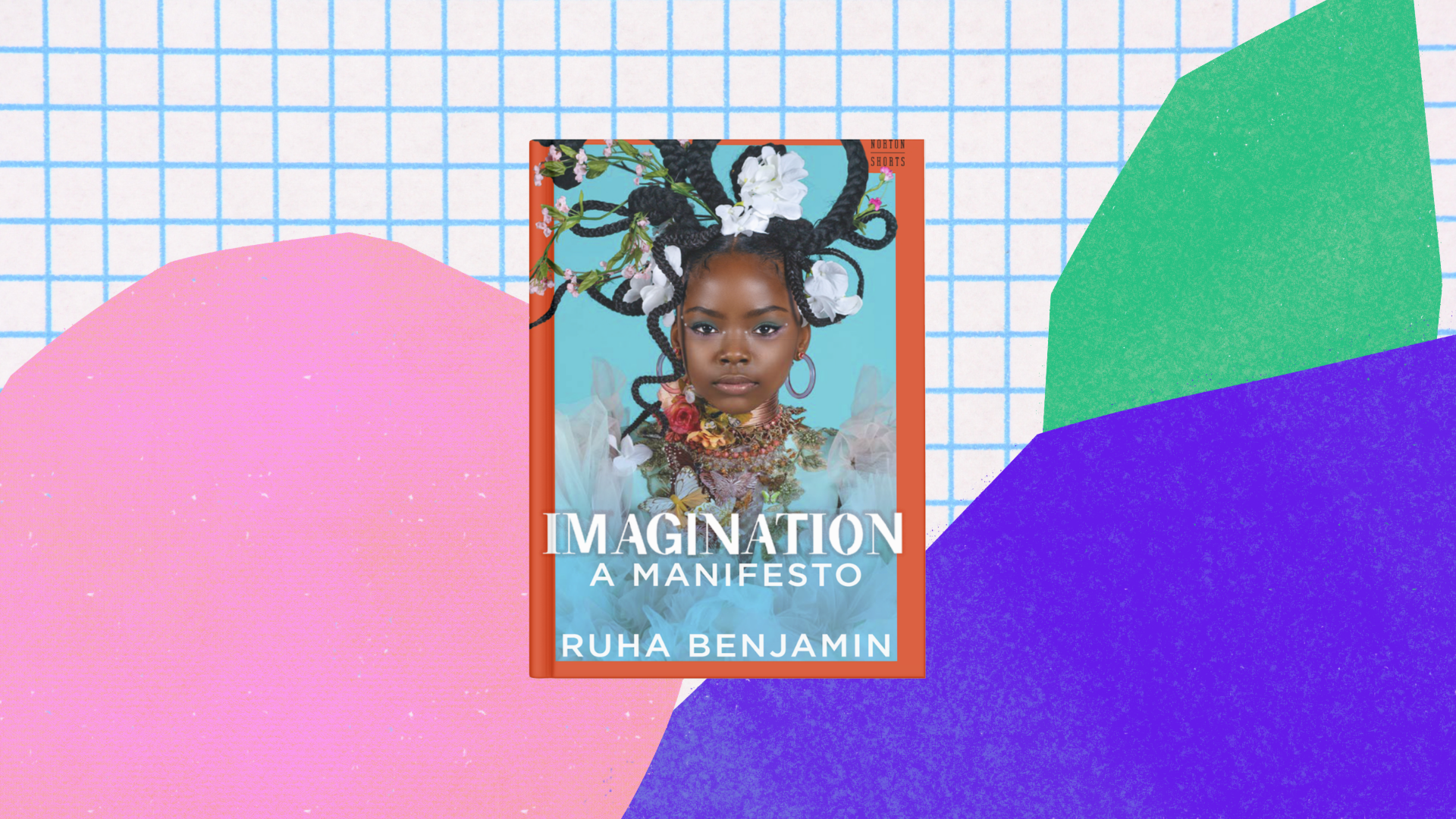
Imagination: A Manifesto by Ruha Benjamin
Benjamin argues that imagination is a vital resource for collective liberation. Deadly systems — mass incarceration, ableism, digital surveillance, eugenics — emerged from human imagination, and fighting them requires imagining differently. She highlights educators, artists, and activists who are refuting powerful narratives that justify the status quo, crafting new stories that reflect our interconnection. The book ends with practical tools for groups ready to take Toni Morrison’s instruction to heart: “Dream a little before you think.”
Black Futures edited by Kimberly Drew and Jenna Wortham
Black Futures presents a visually stunning kaleidoscopic collection of over 100 contributions that answer the vital question “What does it mean to be Black, creative and alive today?” This mosaic includes photo essays, memes, dialogues, recipes, tweets, poetry and more by an intergenerational array of Black artists, technologists, writers and everyday social media creators.
The Art of Ruth E. Carter by Ruth E. Carter
In this magnificent retrospective, legendary costume designer Ruth E. Carter traces over three decades of her pioneering work bringing Black history and identity to visual life on the screen. From shaping the streetwise aesthetic of 80s Spike Lee joints to crafting the dazzling Afrofuturist regality of Black Panther’s Wakanda, Carter has defined the look of Black film. She recounts her artistic journey through candid backstories and anecdotes working with greats like Denzel Washington, Halle Berry and Will Smith.
Miss Major Speaks by Toshio Meronek and Miss Major Griffin-Gracy
In this intimate memoir, legendary activist Miss Major Griffin-Gracy relates her extraordinary journey surviving and fighting back against America’s systems of incarceration as a Black transgender elder. From revolutionary involvement in the Stonewall Riots to combatting the AIDS crisis from her van, Miss Major speaks with rousing honesty about the violence and struggles endured by LGBTQ and marginalized communities.