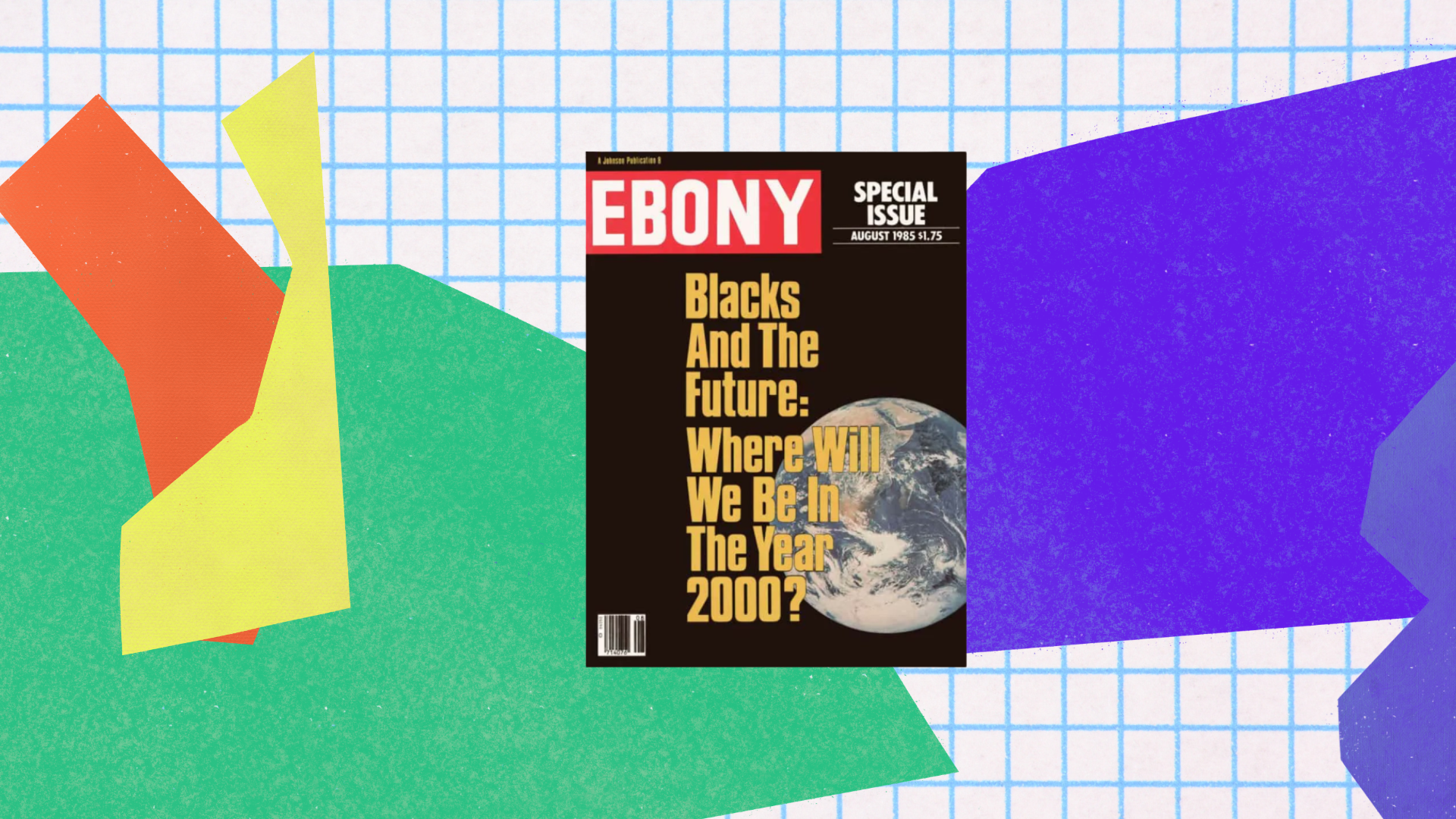
In August 1985, Ebony magazine published a special issue called “Blacks and the Future: Where Will We Be in the Year 2000?” It invited Black Americans to look fifteen years ahead. What landed on newsstands was part forecast, part fantasy, part survival manual.
I was five years old when it came out. Too young to understand what it meant, but already shaped by the futures it dared to imagine. Reading it now, I see something urgent flickering through its glossy pages. Beneath the optimism is a raw and still-radical desire: to keep living, to keep loving, to keep building something Black and beautiful in a country that had always threatened to undo us.
This is a form of Black futurism that didn’t have or need a name. One rooted in refusal, resourcefulness, and remembering. A futurism built for the dinner table.
Less Sci-Fi, More Survival
The issue includes speculative features on fashion, technology, health, education, and relationships. Metallic trench coats share page space with predictions about economic policy and healthcare disparities. What ties it together is endurance. The kind of futurism that dreams of getting through next week with your body, spirit, and children intact.
Almost every prediction rooted itself in a desire to survive with dignity. The authors were obsessed with continuity. With Black existence. Will we be safe? Will we be whole? Will we be allowed to thrive?
These questions still feel dangerously open.
What They Saw Coming
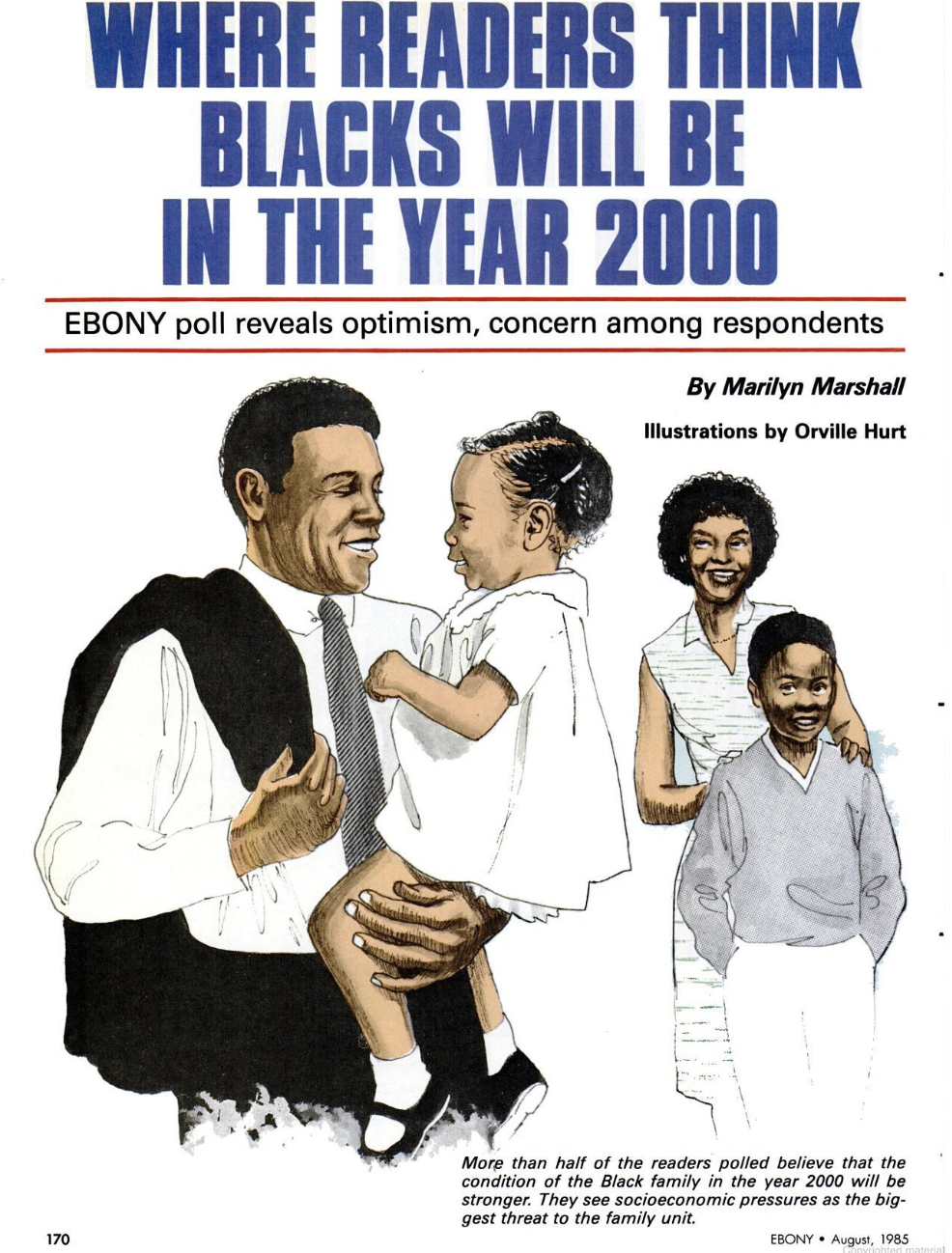
Some forecasts landed with eerie accuracy: the rise of Black billionaires, the explosion of digital communications, the globalization of Black culture. There’s also a deep, unexamined faith in institutional progress, in upward mobility, in assimilation as safety.
It’s hard to read some predictions now without a knot in your stomach. There’s a belief that if we play the game right, we’ll win. That if we earn enough degrees, stay respectable, we’ll be allowed to belong. We know now: that was a rigged game.
This is the heartbreak of Black futures work. To imagine forward inside systems designed to erase you is to risk shrinking your own dream. To mistake survival for liberation. But even in those narrow margins, Black folks found ways to encode hope.
Ancestor Work
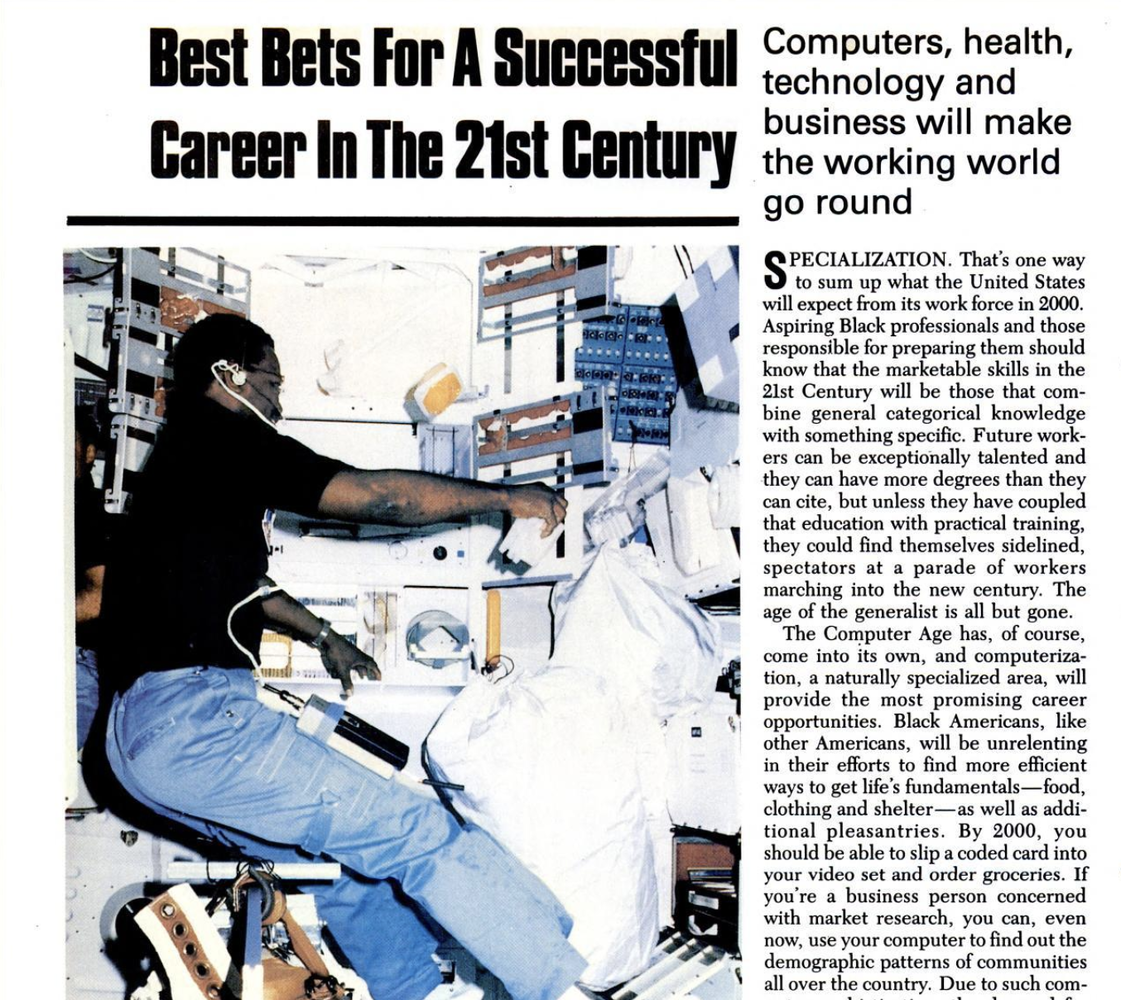
What Ebony did in 1985 looks like what I see in today’s futures practice — without the white papers or the jargon. Back then, it was community elders, cultural workers, and everyday people offering guidance. Now we call it design fiction. The root impulse is the same: to make Black futures visible and viable, even when the dominant culture denies they exist.
They didn’t wait for grant funding or institutional recognition. They wrote into the future because survival demanded it. Every prediction was ancestor work: messages to the future wrapped in prose, fashion, humor, and care.
Black futurism travels through back channels. Through beauty salon conversations and church basement meetings. Tips for dodging school pushout. How to talk to the bank without getting played. Which neighborhoods were safe after dark. These were survival strategies, passed off as small talk.
So What Now?
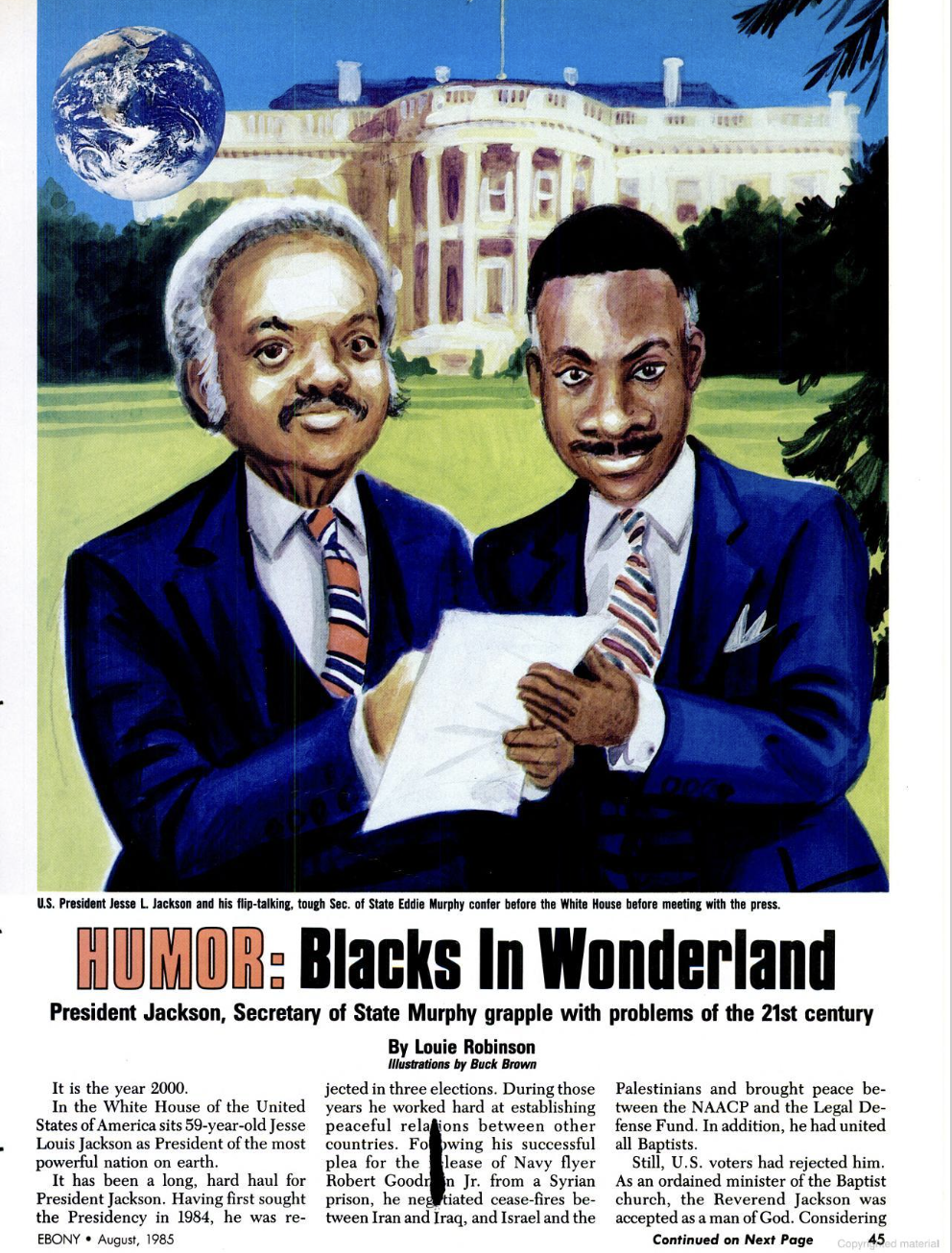
The year 2000 has come and gone. We’re deep into a future messier and more unequal than those 1985 writers could have imagined. The question they posed still echoes: Where will we be?
Here’s what I take from that issue: Black people have always been futurists. We’ve had to be. The practice of imagining forward while the present tries to kill you is a skill, a discipline, a form of resistance. It’s been happening in kitchens and church basements for generations — long before foresight became an industry.
The answers we need won’t come from industry reports. They’ll come from us, the way they always have. In fragments. In care. In persistence. In futures we keep building even when no one is watching.
That’s the inheritance. That’s the work.