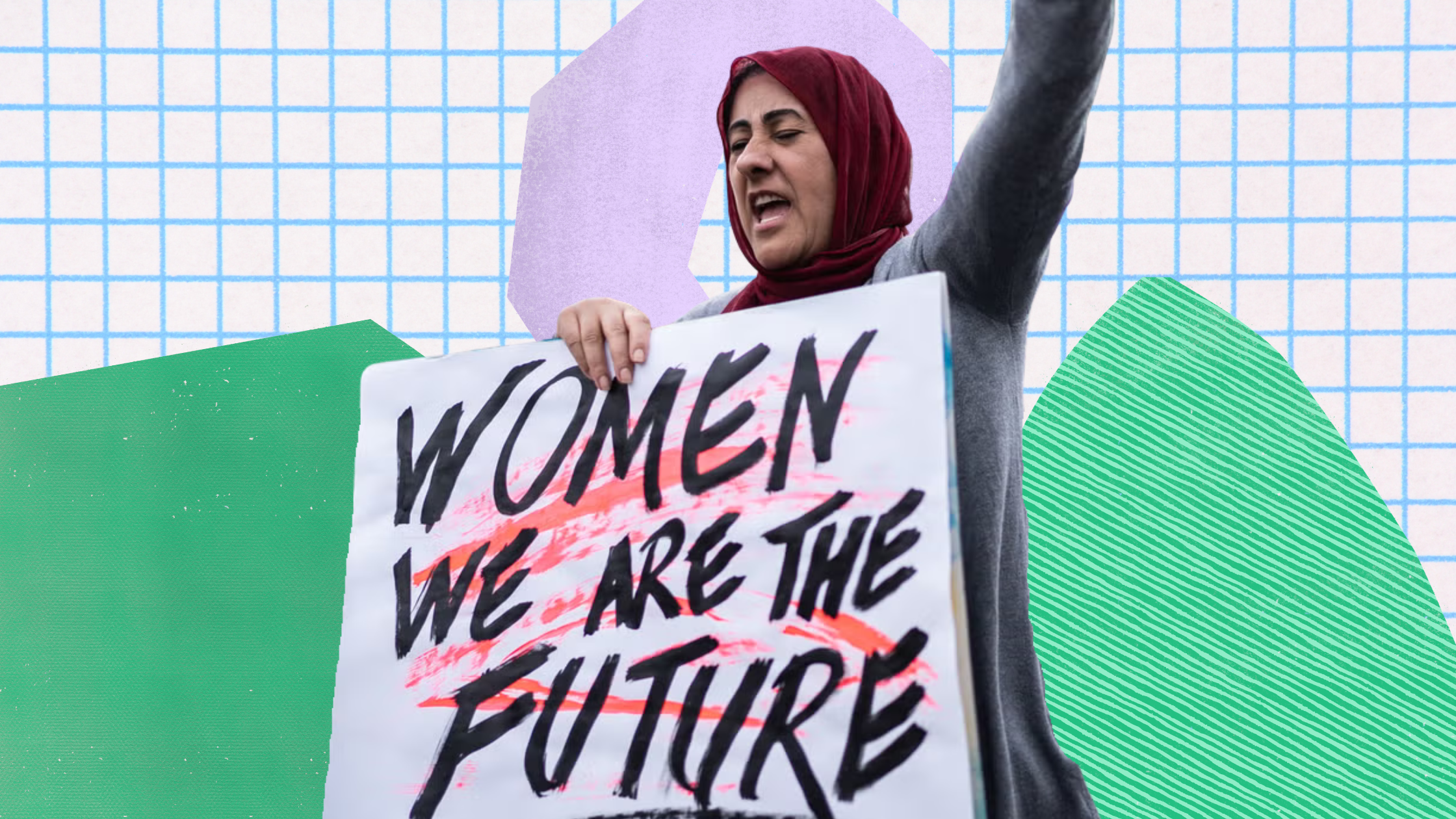
When we talk about the future, we rarely pause to ask: whose future?
Not as a rhetorical question. As a serious question with a specific answer that shapes everything else: what problems get solved, what possibilities get explored, what gets left behind.
Access to Imagination Is Distributed Unequally
The futures that get funded, built, and normalized reflect the values, fears, and desires of those who do the imagining. The imaginers, historically and currently, have been a narrow slice of humanity.
Venture capital flows toward founders who look like previous founders. Think tanks fill futures-facing positions with credentialed thinkers from credentialed institutions. Speculative design emerged from design schools populated largely by people who could afford creative education.
Access to resources — time, education, funding, legitimacy — is distributed unequally. Futures work requires access to resources: time to think long-term, space to experiment, protection from the immediate urgencies of survival.
Communities under the most immediate threat from present conditions typically have the least access to structured futures work. They have the most urgent need for different futures and the most sophisticated intuitions about what needs to change.
The Futures We Get
The narrow imagination problem produces recognizable patterns.
Tech-forward futures that center the concerns of people who have always had their physical needs met. Solutions to problems of abundance while ignoring problems of scarcity.
Futures where the most urgent questions are about optimization, efficiency, productivity — the questions of management — rather than who benefits and what it costs.
Futures where environmental crisis is solved by technology rather than by changing the systems of extraction that created it. Where the future looks like the present but faster, with better interfaces.
These are coherent responses to the genuine concerns of people with particular social locations. The problem is they get positioned as universal.
What Changes When the Imaginer Changes
When Indigenous communities lead futures work, land emerges as a stakeholder. Seven generations becomes a planning horizon. Reciprocity replaces extraction as the organizing principle. Kyle Whyte’s work on Indigenous climate futures demonstrates how different starting assumptions produce fundamentally different outcomes.
When Black women lead futures work, care infrastructure becomes central to economic design. The question shifts from “how do we grow the economy?” to “who does the economy actually serve?” Alexis Pauline Gumbs’ speculative writing and Ruha Benjamin’s Imagination: A Manifesto show what this reorientation makes possible.
When disabled communities lead futures work, the assumption of a standard body gets challenged at the root. Disability justice frameworks, developed by Sins Invalid and others, reframe care and dependency as normal features of human life.
These are fundamentally different starting points that produce genuinely different destinations.
The Argument for Epistemic Inclusion
This is a justice argument. It’s also an epistemological argument.
If you’re trying to understand a complex system, you need observations from multiple vantage points. Any single observation point will have blind spots determined by its location.
The people experiencing the worst outcomes from current systems have the clearest view of those systems’ failure modes. They’ve been developing workarounds, alternative systems, survival strategies that reveal what’s possible under constraint.
This knowledge is strategically valuable. The person navigating systems designed to exclude them has better data about how those systems actually work than the person who moves through them unobstructed. The community building informal mutual aid networks for generations has more practical knowledge about non-market resource distribution than the academic who studies it theoretically.
What Shifts
When we take seriously the question of who gets to imagine, everything changes.
The process changes. More listening and co-creation. More “what does the community already know.”
The questions change. “What would we build if we weren’t constrained by the current system’s logic?” “What do people actually need?”
The outputs change. Community-owned tools for community-led transformation. Visions that communities can use to build power and develop shared imagination.
The futures themselves change. They become more specific about whose well-being they’re optimizing for. More honest about trade-offs. More interesting because they draw on a richer range of human knowledge.
The imagination gap — between the futures being built by well-resourced imaginers and the futures that would serve the majority of humanity — is a power gap, a justice gap, and a strategic failure.
The future belongs to everyone who will live in it. The imagining should too.